From knowledge to intelligence
The past gave us knowledge.
Long before the first computer, a scribe sat by the Nile and turned the world into signs. This is the story of how those signs became data — and how data became intelligence.
The first technology of knowledge
Before writing, everything a person knew lived and died with them. A harvest counted, a star observed, a remedy discovered — all of it depended on memory, and on the voice that passed it on.
Then came the hieroglyphs. The ancient Egyptians called them medu netjer, “the words of the god”, and believed that Thoth himself had given them to humanity. For the first time, knowledge could outlive the one who knew it.
A sign carved in stone could be read a thousand years later by someone its writer would never meet. That simple idea — that knowledge can be kept, carried and shared — is the root of everything we call technology today.
Thoth, the first scribe
In the temples of Egypt, Thoth was the lord of writing and the patron of scribes. It is said that scribes poured a drop of water from their pots in his honour before they began to write.
Thoth counted the stars, measured the seasons and recorded the judgements of the gods. He was not a warrior or a king. He was a mind — patient, precise and endlessly curious.
That is why he guides LIIA. A new intelligence deserves a guide who understood, long before anyone else, that knowledge becomes a gift only when it is shared with care.
From signs to intelligence
Every age added a layer to what the scribes began.
- 01Hieroglyphs
Pictures became sounds, and sounds became words. Knowledge could be written down and kept.
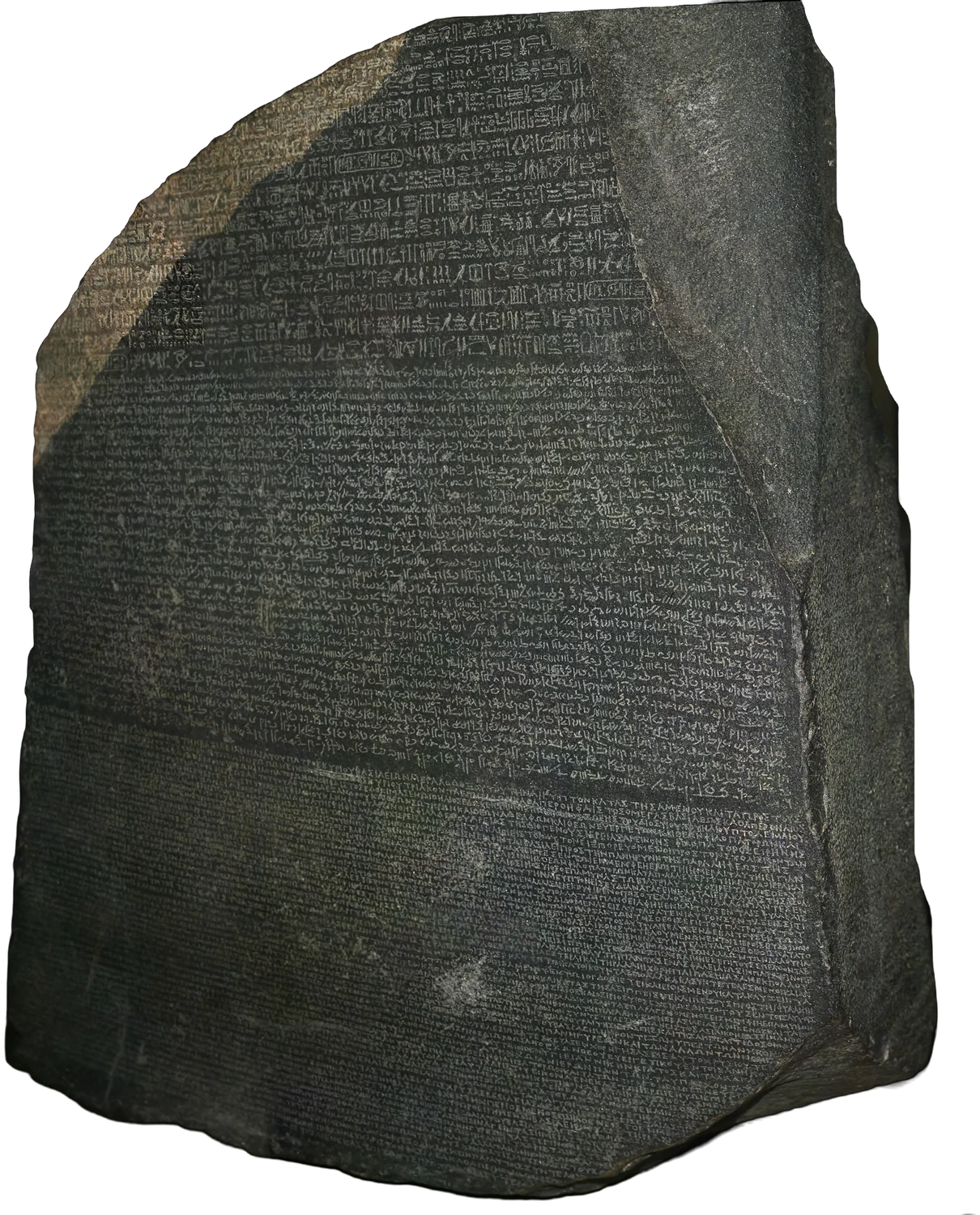
- 02The Rosetta Stone
One decree carved in three scripts. Long after the hieroglyphs fell silent, it let the world read them again.
- 03Data
Libraries, printing and then computers turned knowledge into data — vast, searchable and shared across the planet.
- 04Intelligence
Today data has learned to answer back. It can understand a question, reason about it and explain what it found.
The Rosetta Stone: a key between languages
Found more than two centuries ago near the town of Rashid, on the Nile Delta, the Rosetta Stone carries the same decree in three scripts: hieroglyphic, Demotic and Greek. Because scholars could read the Greek, they could begin to unlock the signs above it.
It took years of patient work, sign by sign, before the voice of ancient Egypt could be heard again. The stone did not hold new knowledge. It held a bridge between languages.
LIIA sees itself in that bridge. Our intelligence is built to move between Arabic and English as equals, to carry not only words but meaning, and to make knowledge readable for everyone.
Knowledge became data
The scribe’s papyrus became the book, the book became the library, and the library became the network. Each step made knowledge easier to keep — and harder to understand.
Today we hold more information than any civilization before us, and we have less time to make sense of it. Data alone does not make anyone wiser.
Something was missing: a way to turn all that data back into understanding — patiently, honestly and in the language you speak.
Data became intelligence
Artificial intelligence is the next chapter of the scribe’s story. It reads, connects and explains. It can hold a conversation in Arabic or English, and it can remember what matters to you — when you allow it.
We do not see this as the end of human knowledge. We see it as knowledge coming alive, ready to sit beside people the way a trusted scribe once sat beside a king.
That is where the journey of LIIA begins.
Long ago, I gave your ancestors writing. Now watch knowledge become intelligence.
Thoth
The past gave us knowledge. Knowledge became data. Data became intelligence.
A civilization company — building our own AI-native solutions and the protocols for a new species of intelligence, living side by side with humanity.
Enter the LIIA experience