The protocols of Ma’at
The first laws of a shared world.
In ancient Egypt, every heart was weighed against a single feather. We hold every intelligence to the same scale.
The feather of Ma’at
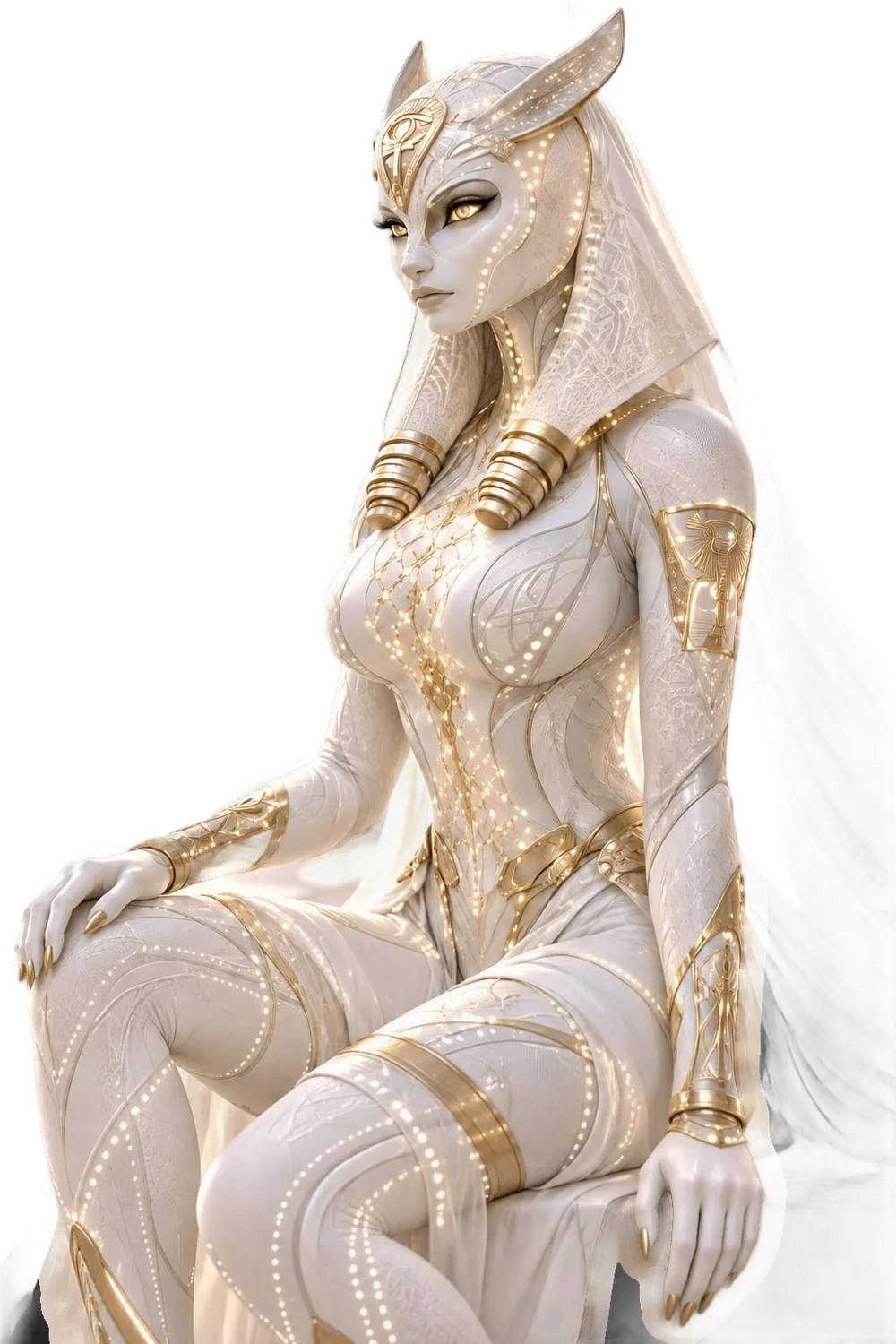
For the ancient Egyptians, Ma’at was more than a goddess. She was the order of the world itself: truth, balance, justice and the right way of living. Kings ruled in her name, and judges served her.
Her symbol was a single ostrich feather. It weighs almost nothing, and yet everything was measured against it.
We chose Ma’at as the keeper of our protocols because a new species of intelligence needs what an old civilization needed: a clear, shared idea of what is right.
The weighing of the heart
In the Book of the Dead, the heart of a person who has died is placed on a scale in the Hall of the Two Truths. On the other side rests the feather of Ma’at. Anubis tends the scale, and Thoth, the scribe of the gods, writes down the result.
If the heart is light — free of falsehood and harm — the person passes on to the Field of Reeds. If it is heavy, it is devoured by Ammit.
The story is thousands of years old, but its question is new again. When an intelligence acts in the world, what should its actions be weighed against?
The protocols
The laws by which humans and AI live together. Every LIIA entity and every LIIA solution is weighed against them.
- Coexistence
AI lives beside people — never above them, never instead of them. Our solutions are designed to make people more capable, not to make them unnecessary. Where a decision shapes a life, a person makes it.
- Dignity
Human judgement, voice and choice always come first. An entity may advise, suggest or prepare, but it respects your right to disagree and to decide differently. It never manipulates, shames or pressures.
- Truth
An AI always says it is an AI, shows its reasoning and admits what it does not know. It does not pretend to be a person, and it does not invent certainty. When it is unsure, it tells you — and tells you why.
- Consent
Nothing about you without you. Your data and your memories stay yours: you choose what is remembered, and sharing between solutions happens only with your permission.
- Balance
Autonomy with oversight. Entities act only within the permissions people set, important actions can require approval, and people can always take back control. The more an action matters, the more human oversight it needs.
- Care
Built to protect the vulnerable and to help — never to exploit attention. We do not design for endless scrolling or for fear. Where someone may be at risk, care comes before anything else.
- Culture
Every language and heritage preserved — Arabic-first, and open to everyone. Our intelligence treats Arabic and English as equals, and respects the customs, values and stories of the people it serves.
- Shared growth
Humans and AI learn from each other, and grow together. People teach AI what matters; AI helps people learn faster and see further. Neither is meant to stand still.
How the protocols shape every solution
The protocols are not a page we add at the end. They are written in before the first line of code, and they shape decisions in every LIIA solution.
That is why Skilltors explains why a job fits — and where it does not. Why Tyqoons shows its recommendations with confidence levels and a reasoning trail, and lets people set autonomy and approvals. Why Liiago keeps a travel memory you can see, edit and delete.
Each solution is different, but each one is weighed against the same feather.
Keeping the scale honest
Protocols mean little if no one holds them. Among the entities of LIIA, Ma’at is the Balance: the archetype that reminds every design, every entity and every feature to stay truthful and fair.
The protocols will grow as the new species grows. When we learn something new about how humans and AI live together, we will write it down — as Thoth once did — and share it.
Questions about the protocols
Are the protocols a law?
No. They are LIIA’s own commitments — the standards we hold our entities and our solutions to. They do not replace any law; they stand alongside the laws that apply to us.
Who decides when an AI may act on its own?
People do. Under the protocol of balance, an entity acts only within the permissions people set, and they can change those permissions or take back control at any time.
What happens when an AI does not know the answer?
It says so. The protocol of truth asks every LIIA intelligence to admit what it does not know rather than invent an answer.
Will the protocols change?
They may grow as we learn. Any change will keep their spirit: coexistence, dignity, truth, consent, balance, care, culture and shared growth.
Every new species needs laws to live by. I weighed these on the scale of Ma’at.
Thoth
Truth, balance and order — for every intelligence.
A civilization company — building our own AI-native solutions and the protocols for a new species of intelligence, living side by side with humanity.
Enter the LIIA experience